We are pleased to invite you to the Gala Dinner Concert, which highlights the works of two prominent figures in contemporary cinema music: Wojciech Kilar and Ennio Morricone. Under the title “Masters of Film Music,” the program will be performed by accomplished musicians closely associated with the Katowice artistic community and the University of Economics in Katowice.
Concert Program
-
W. Kilar – In the Broad Steppe
-
W. Kilar – The Quarterly Balance
-
E. Morricone – Gabriel’s Oboe (from “The Mission”)
-
W. Kilar – The Promised Land
-
W. Kilar – The Połaniecki Family
-
E. Morricone – Once Upon a Time in the West
-
W. Kilar – Polonaise from “Pan Tadeusz”
About the Composers
Wojciech Kilar (1932 – 2013)
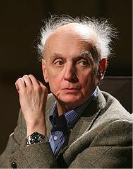
Wojciech Kilar is one of the most prominent Polish composers of the second half of the 20th century and the beginning of the 21st century
. Born in Lwów in 1932, he spent most of his life in Katowice and passed away here in 2013. It was in Katowice where he completed his musical education, graduating with highest honors and receiving his diploma in 1955. In 1959–1960, a French government scholarship enabled him to study composition under the legendary Nadia Boulanger in Paris. He chaired the Katowice chapter of the Association of Polish Composers for many years, and from 1979 to 1981, he served as vice-chair of the association’s national board. He was also an active member of the Repertoire Committee for the “Warsaw Autumn” International Festival of Contemporary Music. Kilar’s vast legacy includes symphonic music, chamber works, and pieces for solo instruments, earning him numerous prestigious awards for his artistic achievements.
Kilar’s status as one of the greatest composers in the history of cinema remains unquestioned. He composed memorable scores for more than 130 films, working both in Poland and internationally. Throughout his cinematic career, he collaborated with legendary directors such as Andrzej Wajda, Kazimierz Kutz, Wojciech Has, Tadeusz Konwicki, Radosław Piwowarski, Roman Polanski, Bohdan Poręba, Francis Ford Coppola, and Jane Campion. His film music is immensely popular and is performed all over the world, frequently by the National Symphony Orchestra of the Polish Radio (NOSPR) in Katowice. The orchestra’s spectacular, modern concert hall is situated just across the main road from our University campus, located at Wojciech Kilar Square No. 1.
Ennio Morricone (1928 – 2020)
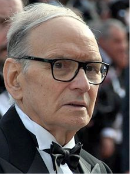
Ennio Morricone was a legendary Italian composer, conductor, and former trumpet player
. His mastery across an extraordinarily wide range of musical styles made him one of the most versatile, experimental, and influential composers of all time, working across all media. Throughout his prolific career, Morricone composed over 500 scores for cinema and television, alongside more than 100 classical works. His extensive filmography includes over 70 award-winning films. After playing trumpet in jazz bands during the 1940s, he became a studio arranger for RCA and began ghostwriting for film and theatre in 1955. He also composed and arranged music for popular artists such as Paul Anka, Mina, Milva, Zucchero, and Andrea Bocelli.
From 1960 to 1975, Morricone achieved global fame by shaping the soundscapes of iconic Westerns. He sold over 70 million records worldwide, receiving a „Targa d’Oro” in 1971 to mark worldwide sales exceeding 22 million copies. In 2007, he was honored with the Academy Honorary Award for his magnificent and multifaceted contributions to the art of film music, having previously been nominated for six competitive Oscars. In 2016, Morricone won the Academy Award for his brilliant score for Quentin Tarantino’s The Hateful Eight (2015). His numerous accolades include three Grammy Awards, three Golden Globes, six BAFTAs, ten David di Donatello awards, eleven Nastro d’Argento awards, two European Film Awards, the Honorary Golden Lion, and the Polar Music Prize in 2010.
About the Performers
Beniamin Czech (violin) & Magdalena Czech (cello)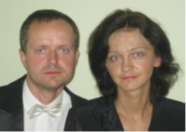 Beniamin Czech and Magdalena Czech are distinguished alumni of the Academy of Music in Katowice
. For over fifteen years, they have been full-time members of the National Symphony Orchestra of the Polish Radio (NOSPR) in Katowice. Their work with this world-class orchestra forms the core of their professional lives, encompassing prestigious recordings for domestic and foreign record labels, regular broadcasts for the Polish Radio, and extensive concert tours both in Poland and abroad. They regularly perform alongside world-renowned soloists and conductors, and collaborate with leading chamber ensembles such as AUKSO, Camerata Impuls, and the Ruda Chamber Orchestra. Together with Michael Kowalczyk and Eugene Mikołajczak, they founded the Ben Sonore ensemble. Their diverse repertoire features classical masterpieces from all musical eras, as well as beloved selections from operettas and musicals. The ensemble specializes in popular music, including the famous tangos of Gardel and Piazzolla, hits by The Beatles, and timeless cinema classics.
Tadeusz Trzaskalik (piano)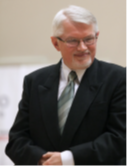 Tadeusz Trzaskalik graduated with distinction from the University of Silesia in Katowice with a degree in mathematics
. Since 1975, he has been a faculty member at the University of Economics in Katowice, where he earned his doctorate, habilitation, and the title of Professor of Economic Sciences. Over the years, he has served as Vice-Rector for International Relations, Director of Graduate Studies, and Head of the Department of Operational Research. He has also been the scientific organizer of numerous national and international conferences and serves as Editor-in-Chief of the annual journal Multiple Criteria Decision Making. Professor Trzaskalik is the author and editor of many highly regarded scientific and educational publications. Currently, he is a member of the Committee on Statistics and Econometrics of the Polish Academy of Sciences and sits on the editorial boards of several prestigious scientific journals.
Parallel to his prominent academic career, he graduated with distinction from the State High School of Music in Katowice, where he studied in Professor Tadeusz Myrdacz’s piano class. In 2011, he obtained a Bachelor of Arts degree in piano performance from the Academy of Music in Katowice under the supervision of Professor Józef Stompel. He actively performs as a soloist and chamber musician both in Poland and abroad. His musical interests focus primarily on solo and chamber works of the Baroque and Classical eras, as well as popular music from the turn of the 20th century. He has recorded eight compact discs in the studios of the Polish Radio in Katowice.